
 English
Notizie
Casa / Notizia / Novità del settore / Pull Tarp System Guide: Fabric, Fitment, Sizing and Failure Points Explained

Unità 2, 15#-405, Comunità Kuanglu, Distretto di Gulou, Nanchino, Cina (Ufficio)

info@safelong.net

A 20-cubic-yard roll-off container pulls out of a demolition site at 6:40 in the morning with rubble stacked above the rail. Four miles down the road the truck is stopped, and the problem is not the debris, it is the open top. The cheapest correction in that moment is rarely a new container. It is a pull tarp system, and the difference between one that survives four winters and one that tears apart in eight months usually comes down to two decisions: how the coating is bonded to the base cloth, and how the cover is sized and stored.
Here is the short answer first. A pull tarp system is a covering assembly in which a coated fabric is fastened to a spreader bar, the bar travels along side rails or a cable track, and the operator pulls a rope, turns a crank, or presses a switch to draw the cover across the open top in one motion. The metal hardware is rarely the first thing to fail. The fabric goes first, then the grommets, then the seams, and only after that do cables, springs and end caps enter the conversation.
That order matters when you are budgeting. If you are specifying a system for roll-off boxes, transfer trailers, grain carts or dump bodies, the useful work is matching coating weight and base cloth to the abrasion, UV and cold-flex demands of the route, then sizing the cover so it never has to stretch in order to reach the latch.
Strip away the marketing language and a pull tarp is a simple machine. One edge of the cover is fixed to a container or trailer, the opposite edge is attached to a rigid bar, and that bar is dragged along a guide until the opening is closed. Everything else exists to keep the fabric square, keep the bar on track, and keep the operator out of the weather.
The parts that show up on a bill of materials are consistent across most systems:
Buyers usually start with the drive rather than the fabric, which is the wrong end of the problem. The drive sets cycle time and operator effort. The fabric sets how often you write a replacement cheque. Both matter, but they matter on different schedules.
| Drive type | Typical cycle time | Upfront cost band | Works best on | Main drawback |
|---|---|---|---|---|
| Manual pull rope | 15 to 30 seconds | Lowest | Small fleets covering 2 to 10 loads per day | Operator stands outside in all weather |
| Crank handle | 20 to 40 seconds | Middle | Transfer trailers and exposed sites with frequent wind | Handle and gear wear, more moving parts |
| Electric or hydraulic | 8 to 15 seconds | Highest | Municipal and high-cycle fleets above 30 cycles per day | Wiring, motor service, extra weight on the frame |
A powered drive on a container that is covered twice a day is a waste of capital. A pull rope on a container that is covered forty times a day is a waste of labour, and it also shortens cover life, because tired operators close the tarp hard and let it slap down on the rails.
These systems cluster in jobs where an open top costs money, creates a safety exposure, or breaks a load-covering requirement on public roads. The common thread is that a single person has to close a large opening quickly, from ground level, without climbing on the load.
Duty cycle is the variable most buyers underestimate. A box that is covered three times a day will often outlive its first cover by five years or more, because the fabric spends most of its life rolled and shaded. A box that is covered forty times a day on an outdoor cable track wears the leading edge, the hem and the grommet row at a rate that turns coating weight into the deciding purchase criterion rather than the initial price.
A cover that cycles more than about 8,000 times a year should be treated as a wear part with a service interval, not as a permanent fixture. Fleet managers who track replacement dates against cycles rather than against calendar months consistently get fewer roadside surprises.
When a fleet manager calls about a torn or worn cover, the end caps and the spreader bar usually still have years of service left in them. The order is fabric only. That is why the specification conversation should begin with coating weight and base cloth, not with the frame.
The figures worth reading on a data sheet:
Two production routes dominate tarp fabric, and they behave differently once they are mounted on a moving bar.
Film tarpaulin is made by laminating a pre-formed PVC film onto both faces of the scrim under heat and pressure. Thickness tolerance is tight, the surface is smooth, and the finished cover glides along a cable track with comparatively little drag. The smooth face also accepts print and colour evenly, which matters when a fleet wants identification on the cover.
Knife-scraped tarpaulin is made by spreading a PVC paste onto the scrim and scraping it to a controlled thickness before curing. The paste penetrates the weave, so coating adhesion and abrasion resistance come out higher, and the surface has a slightly textured, fabric-like feel. It is normally the heavier of the two.
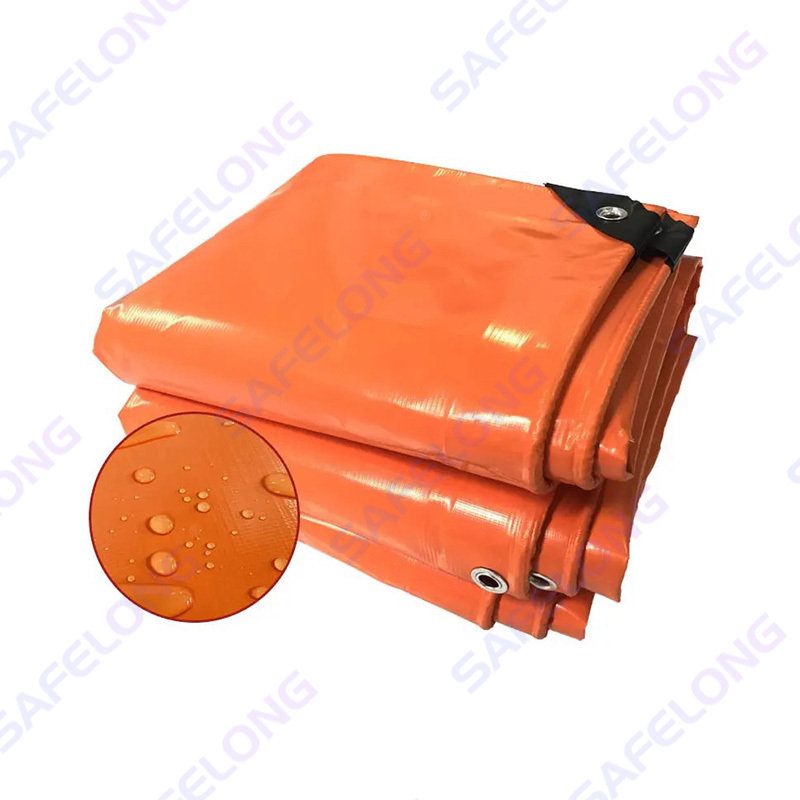 Film TarpaulinThe film tarpaulin cover is made by laminating PVC film to lightweight polyester base fabric through high-temperature calendering process to form a smooth waterproof l...View Product →
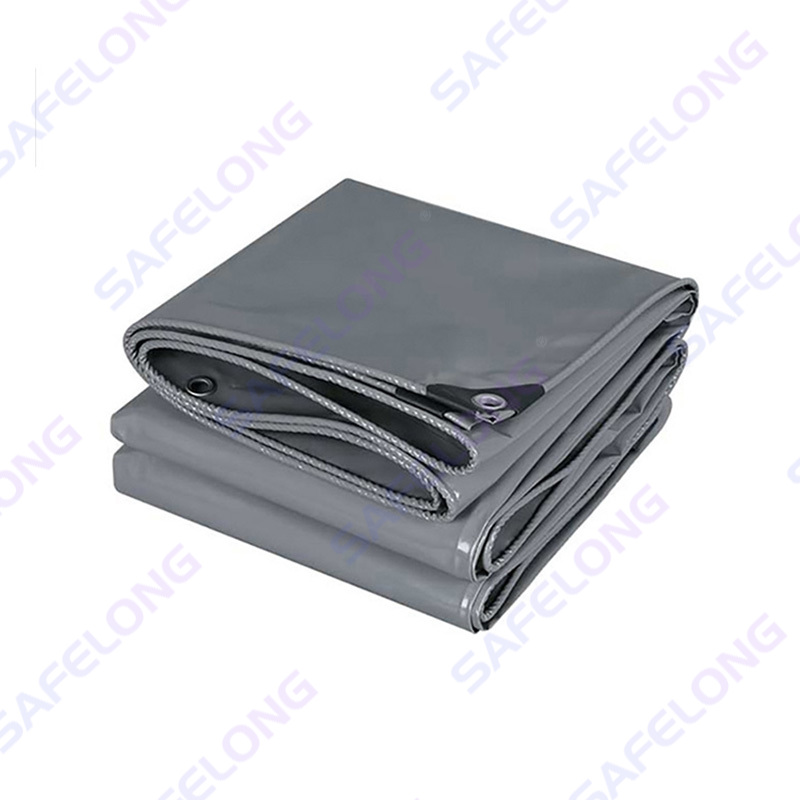 Knife-scraped tarpaulinThe knife-scraped tarpaulin cover adopts a multi-layer scraping process to scrape the PVC paste layer by layer on the surface of the high-strength base fabric, and the...View Product →
The practical rule is short. If a cover cycles more than twenty times a day along a track, the lower friction of a film tarpaulin reduces edge wear and operator effort. If the cover drags across gravel, scrap or broken concrete, the knife-scraped construction keeps its coating longer. A fuller comparison of base cloth, coating and finishing options appears in this buyer guide to PVC tarpaulin covers.
| Property | Film tarpaulin | Knife-scraped tarpaulin |
|---|---|---|
| Coating method | Laminated PVC film | Spread and scraped PVC paste |
| Surface finish | Smooth and uniform | Textured, fabric-like |
| Thickness tolerance | Tight | Wider |
| Coating adhesion | Good | Higher |
| Abrasion resistance | Moderate | High |
| Roll drag on track | Lower | Higher |
| Typical coating weight | 610 to 750 gsm | 700 to 900 gsm |
| Best fit | High-cycle tracks and printed fleet covers | Debris, gravel and scrap hauling |
Measure the container, not the old tarp. A used cover has usually stretched in one direction and relaxed in the other, and copying it transfers the same misfit into the new order.
Five measurements are enough for most systems:
Then apply the allowances:
A worked example makes this concrete. A 20-cubic-yard roll-off box measures roughly 6.1 m long, 2.3 m wide and 1.5 m deep. A cover for that box would normally be ordered at 6.4 to 6.55 m long and 2.6 to 2.8 m wide, with grommets at 550 mm centres and a 50 mm double hem. A supplier who quotes a cover matching the box exactly, with no allowance anywhere, is selling a cover that will sit under permanent tension from the first day and will lose its grommet row first.
Allow about 1.5 to 2 percent manufacturing tolerance on finished dimensions. PVC-coated polyester relaxes slightly after production, then settles into its final size after a few weeks of use. A cover that arrives 20 mm long and perfectly square is a better purchase than one that arrives exactly on dimension and slightly diamond-shaped.
Most complaints about a new tarp system trace back to installation rather than to the fabric. A five millimetre misalignment over a six metre run is enough to make a cover pull to one side, and a cover that pulls to one side wears its edge on every single cycle.
If two diagonals differ by more than 20 mm, stop and re-set the cover before the first load. A diamond-shaped tarp will always track to the loose side.
Covers fail in predictable ways, and each pattern points to a specific fix. Treating a symptom as a fabric quality problem when it is actually an alignment problem leads to the same failure on the replacement cover.
| Symptom | Usual cause | Corrective action |
|---|---|---|
| Grommet tear-out | Grommets set too close to the edge, or an undersized cover | Re-hem with webbing and reset grommets inboard |
| Seam separation | Too little overlap or poorly controlled welding | Specify a minimum 25 mm overlap and welded seams |
| Frayed leading edge | Fabric dragging on a misaligned track | Realign the track and add edge webbing |
| Sagging in the centre | Spreader bar too short or bowed under load | Fit a bar spanning the full opening width |
| Crank binds | Worn gears, or a cover heavier than the drive is rated for | Lubricate and clean, then check coating weight against drive rating |
| Cracking in cold weather | Plasticizer loss in an aged cover | Replace with a cover rated for cold flex at minus 30 C |
| Chalking and colour fade | UV exposure without stabilization in the compound | Specify UV-stabilized coating and store covers shaded |
A quotation that lists only a length, a width and a colour is not a specification. These questions separate a workable quote from a guess:
Ask for the coating weight in writing. A verbal answer of "heavy duty" has no measurable meaning, and it makes a replacement order impossible to compare against the original.
A pull tarp system needs very little attention, but the little it needs matters. Most of the work is inspection rather than repair.
A ten minute inspection per container each quarter is cheaper than a single roadside stop. Fleets that log grommet condition alongside tyre pressure tend to catch cover problems three to six weeks before they become a load security issue.
The purchase splits into two numbers that behave very differently: the mechanism and the cover.
The mechanism, meaning end caps, bar, track and drive, is a capital item whose service life is measured against the container itself. Once it is fitted correctly and aligned, it typically outlasts several covers.
The cover is a wear item. Duty cycle, sun exposure, grit and how the operator closes the tarp all shorten or extend its life. Two cost levers consistently outweigh the headline price:
A third lever is standardisation. If a fleet runs three container lengths, ordering the same fabric specification for all of them makes rotation possible: a lightly used cover can be moved from a low-cycle site to a high-cycle site instead of being scrapped while it still has life in it.
It closes the open top of a container or trailer with a single operator action. The most common applications are roll-off boxes carrying debris, transfer trailers moving waste, grain carts and dump bodies hauling loose material. The purpose is usually a mix of load containment, weather protection and keeping the vehicle legal on public roads.
It depends almost entirely on cycles rather than months. A 650 gsm cover on a container closed a few times a day can stay serviceable for years, while the same cover on a track used dozens of times daily in a high-UV region may need replacement far sooner. Tracking replacement against cycle count rather than the calendar gives a far more accurate forecast.
In most cases yes. End caps, bars and tracks rarely wear out before the cover does. Measure the mounting points and the open top rather than the old cover, then order the fabric with the bar attachment webbing already fitted so the swap takes minutes rather than hours.
For low-cycle roll-off boxes, 610 to 650 gsm is usually enough. For cable-track systems with high cycle counts, or for containers carrying gravel, scrap or broken concrete, 700 to 900 gsm with a knife-scraped coating holds up better. Heavier is not automatically better: above roughly 900 gsm the roll becomes stiff and harder for the drive to move.
Manual pull makes sense up to roughly ten closures per day, and a crank suits transfer trailers and windy sites. Electric and hydraulic drives pay for themselves where a container is opened and closed dozens of times a day and driver time is the real cost. The drive should be chosen against the daily cycle count, not against the size of the container.
Cold cracking usually points to plasticizer migration in an aged cover, which makes the compound stiff below freezing. A cover formulated to stay flexible at minus 30 C handles the same conditions without splitting along the fold lines. Cracking on a cover less than two seasons old suggests the material was never rated for cold service.
Record the inside length of the opening, the outside width at the widest point, the rail height down to the track, and the mounting positions at both ends. Then add 300 to 450 mm to the length and 150 to 250 mm per side to the width. Never measure a used cover and copy it, because the original fabric has already changed shape.
For debris and scrap, water shedding matters more than absolute waterproofing, and a standard PVC-coated fabric is more than adequate. For grain, fertiliser, ash or any load that must stay dry, specify a fully coated fabric on both faces with welded seams, because uncoated stitch lines will wick water into the load.
A pull tarp system is simple enough to be specified badly, and the mistakes are almost always the same ones: a cover copied from a stretched original, a coating weight chosen on price, grommets set too close to the hem, and a track that was never checked for alignment. Get those four things right and the system becomes background equipment that nobody talks about.
Start with the load, then the duty cycle, then the fabric, and leave the drive choice until last. If you are sourcing covers for roll-off boxes, transfer trailers or grain carts, Sulong Environmental Technology produces coated PVC and TPU fabrics on a single-pass coating line and cuts finished covers to measured container dimensions with reinforced hems and set grommet spacing.
Send the five measurements, the daily cycle count and the material being carried, and the specification work takes care of itself.
Se hai domande, compila il modulo di contatto in fondo alla pagina e contattaci.
Accetti i Termini e l'Informativa sulla Privacy di Sulong.

N.9 Parco industriale dei materiali filtranti, Funing, Cina (fabbrica)
Unità 2, 15#-405, Comunità Kuanglu, Distretto di Gulou, Nanchino, Cina (Ufficio)

+86-15724842588

+86-515-68589588

+86-515-68589588

info@safelong.net
Copyright © Jiangsu Sulong Eco-Technologies Co., Ltd.

